
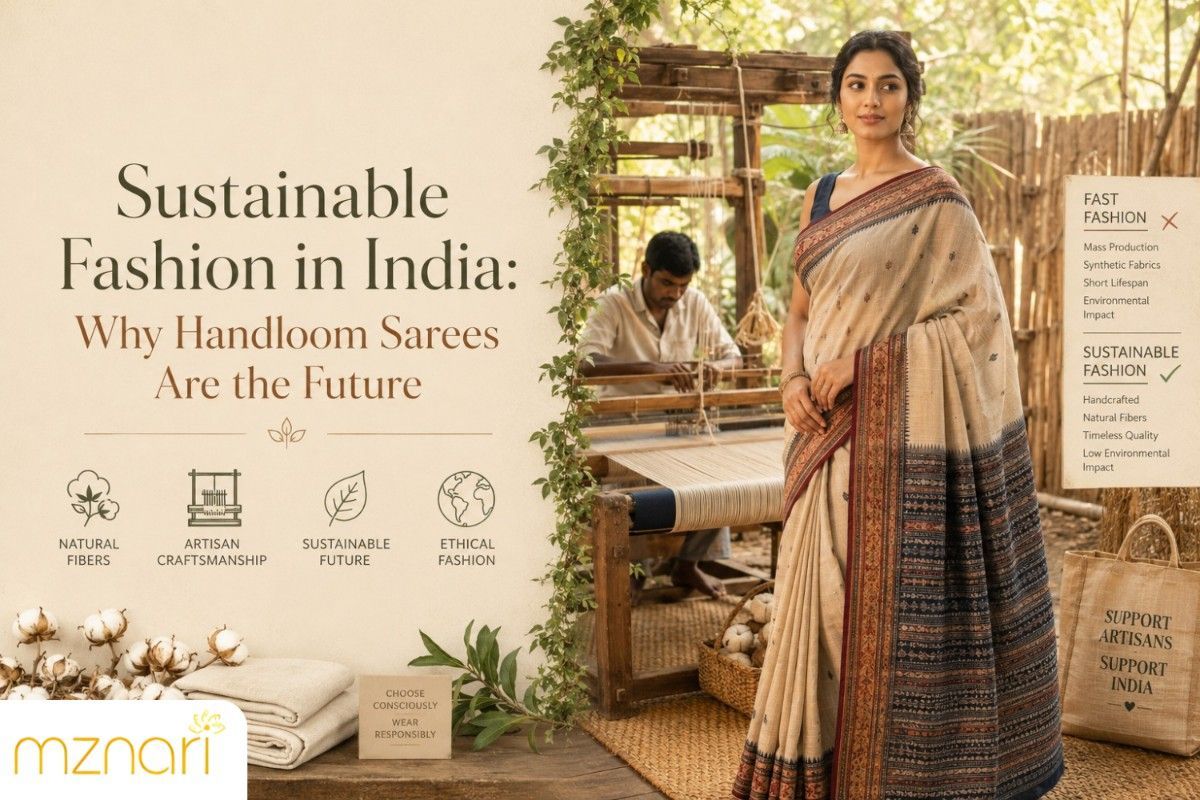
Fashion trends change every season, but one movement is becoming stronger every year—sustainable fashion. More consumers today are becoming aware of how their clothing choices affect the environment, local communities, and future generations.
In India, handloom sarees are emerging as one of the most important symbols of sustainable fashion. These sarees combine traditional craftsmanship, eco-friendly production, and timeless beauty, making them a perfect choice for conscious consumers.
If you’re interested in sustainable fashion handloom sarees, this guide will explain why handloom sarees are shaping the future of Indian fashion and why more women are choosing them over mass-produced alternatives.
What Is Sustainable Fashion?
Sustainable fashion focuses on creating and consuming clothing in a way that reduces environmental impact while supporting ethical production practices.
The goal of sustainable fashion is to:
- Reduce waste
- Use eco-friendly materials
- Support local artisans
- Promote ethical labor practices
- Encourage long-lasting clothing instead of fast fashion
Today, consumers are moving away from disposable fashion and investing in quality garments that last for years.
This shift has increased interest in sustainable clothing choices in India, especially handloom products.
Why Sustainable Fashion Is Growing in India
India has a rich textile heritage that naturally aligns with sustainability.
Traditional Indian weaving methods often use:
- Natural fibers
- Handmade production techniques
- Minimal machinery
- Local craftsmanship
As awareness about environmental issues grows, more consumers are exploring sustainable fashion in India with handloom sarees because they offer a perfect balance between style, culture, and responsibility.
What Makes Handloom Sarees Sustainable?
Handloom sarees are woven manually by skilled artisans using traditional looms.
Unlike mass-produced machine-made garments, handloom production requires very little electricity and creates significantly less environmental impact.
Several factors make handloom sarees sustainable:
- Low energy consumption
- Reduced carbon footprint
- Support for local artisans
- Long-lasting quality
- Less industrial waste
These qualities make handloom sarees one of the most environmentally friendly fashion choices available today.
How Handloom Sarees Support Sustainable Fashion
Many people wonder how handloom sarees support sustainable fashion.
The answer lies in the way they are produced and consumed.
1. Minimal Energy Consumption
Handloom weaving is primarily done by hand.
Unlike large textile factories that require heavy machinery and electricity, traditional handlooms consume very little energy.
This significantly reduces environmental impact.
2. Lower Carbon Footprint
Machine-based textile manufacturing often involves:
- Large factories
- Industrial processing
- High energy consumption
- Extensive transportation
Handloom production operates on a much smaller scale, resulting in a lower carbon footprint.
This is one of the biggest reasons why sustainable fashion handloom sarees are gaining popularity.
3. Reduced Textile Waste
Fast fashion contributes millions of tons of textile waste every year.
Handloom production follows a slower and more thoughtful process, reducing unnecessary waste and overproduction.
Consumers who invest in handloom sarees are also more likely to keep and wear them for years, reducing clothing disposal.
Benefits of Handloom Sarees for Sustainable Fashion
There are many benefits of handloom sarees for sustainable fashion that go beyond environmental impact.
Let’s explore some of the most important ones.
1. Long-Lasting Quality
Handloom sarees are known for their durability.
Because skilled artisans carefully weave every thread, the final product often lasts much longer than mass-produced garments.
Benefits include:
- Better fabric strength
- Long-term value
- Timeless appeal
- Less frequent replacement
A saree that lasts for years is far more sustainable than one that needs replacement every season.
2. Supports Local Artisans
One of the most important aspects of sustainable fashion is supporting the people who create clothing.
When you buy a handloom saree, you directly support:
- Weaver communities
- Rural artisans
- Traditional craftspeople
- Family-owned textile businesses
This helps preserve centuries-old weaving traditions while creating employment opportunities.
3. Encourages Ethical Fashion
Handloom production is often more transparent than large-scale industrial manufacturing.
Consumers can better understand:
- Where the product comes from
- Who created it
- How it was produced
Ethical fashion focuses on fair treatment and fair compensation for artisans, making handloom products a responsible choice.
4. Uses Natural and Breathable Fabrics
Many handloom sarees are made from natural fibers such as:
Natural fabrics are:
- Comfortable
- Breathable
- Biodegradable
- Environmentally friendly
These fabrics are also ideal for Indian weather conditions.
Sustainable Clothing Choices in India: Why Sarees Matter
When discussing sustainable clothing choices in India, sarees deserve special attention.
Unlike many fast-fashion garments, sarees:
- Never go out of style
- Can be worn for years
- Can be reused in multiple ways
- Are often passed down through generations
This long lifespan naturally supports sustainable fashion principles.
Why Handloom Sarees Are Better Than Fast Fashion
Fast fashion focuses on:
- Low-cost production
- Rapid trend cycles
- Frequent replacements
This often leads to:
- Excessive waste
- Environmental damage
- Short product lifespan
Handloom sarees offer the opposite:
| Fast Fashion | Handloom Fashion |
|---|---|
| Mass production | Artisan-made |
| Short lifespan | Long-lasting |
| High waste | Low waste |
| Trend-driven | Timeless |
| Industrial production | Traditional craftsmanship |
This is why many fashion experts consider handloom products the future of sustainable fashion.
Popular Handloom Sarees for Sustainable Fashion Lovers
Women interested in sustainable fashion can explore several handloom options.
Mul Cotton Sarees
Best for:
- Daily wear
- Summer season
- Office wear
Benefits:
- Lightweight
- Soft
- Breathable
Linen Sarees
Best for:
- Professional styling
- Elegant occasions
- Minimalist wardrobes
Benefits:
- Durable
- Comfortable
- Stylish
Handloom Cotton Sarees
Best for:
- Everyday comfort
- Traditional styling
- Sustainable wardrobes
Benefits:
- Eco-friendly
- Long-lasting
- Easy maintenance
Why Young Consumers Are Choosing Handloom Sarees
Today’s younger generation is becoming increasingly conscious about:
- Sustainability
- Ethical shopping
- Supporting local businesses
- Reducing environmental impact
As a result, handloom sarees are no longer seen as traditional garments only for older generations.
Modern women are styling handloom sarees with:
- Contemporary blouses
- Minimal accessories
- Modern draping styles
- Fusion fashion elements
This combination of tradition and modernity is driving their popularity.
Tips for Building a Sustainable Saree Wardrobe
If you want to embrace sustainable fashion, consider these tips:
Buy Quality Over Quantity
Invest in fewer but better-quality sarees.
Choose Natural Fabrics
Select cotton, linen, and handloom fabrics whenever possible.
Support Ethical Brands
Purchase from brands that work directly with artisans.
Care for Your Sarees Properly
Proper maintenance increases lifespan and reduces waste.
The Future of Sustainable Fashion in India
India’s handloom industry already possesses many qualities that global fashion brands are trying to achieve:
- Low environmental impact
- Ethical production
- Artisan craftsmanship
- Cultural heritage
- Long-lasting products
As awareness continues to grow, sustainable fashion in India with handloom sarees is likely to become even more important.
Handloom sarees represent a future where fashion is beautiful, meaningful, and responsible.
Final Thoughts
The rise of sustainable fashion handloom sarees reflects a growing shift toward mindful consumption and responsible fashion choices.
Handloom sarees offer everything modern consumers are looking for:
- Sustainability
- Comfort
- Quality
- Timeless beauty
- Ethical production
By choosing handloom sarees, you are not only investing in a beautiful garment but also supporting artisans, preserving traditional craftsmanship, and contributing to a more sustainable future.