
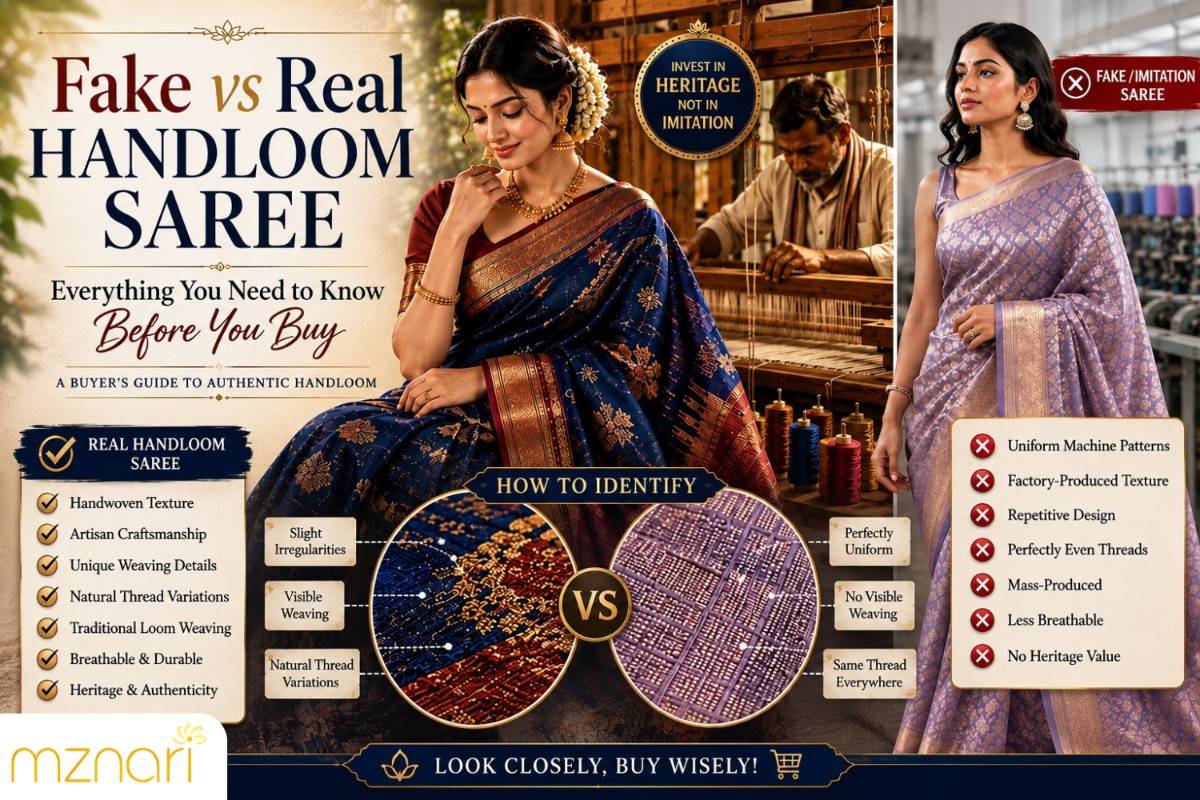
How to Identify Fake vs Real Handloom Saree Before Buying
Handloom sarees are one of India’s most treasured textile traditions. They are known for their craftsmanship, comfort, uniqueness, and cultural value. However, with the growing popularity of handloom products, the market has also seen an increase in machine-made sarees being sold as handloom sarees.
Many buyers struggle to differentiate between authentic and imitation products, especially when shopping online. This is why understanding the difference between a Fake vs Real Handloom Saree is important before making a purchase.
In this guide, you will learn how to identify genuine handloom sarees, understand certification marks, and avoid common mistakes while buying handloom sarees online.
Why Are Fake Handloom Sarees So Common?
The demand for handloom sarees has increased significantly in recent years because people are becoming more interested in:
- Sustainable fashion
- Handmade products
- Traditional Indian textiles
- Comfortable natural fabrics
Unfortunately, some sellers take advantage of this demand by marketing machine-made sarees as handloom products.
Since many buyers are unfamiliar with handloom weaving techniques, identifying genuine sarees can be difficult.
This makes it important to understand how to identify fake vs real handloom saree before buying.
What Is a Real Handloom Saree?
A real handloom saree is woven manually by skilled artisans using traditional looms.
Unlike machine-made sarees, every handloom saree requires:
- Time
- Skill
- Precision
- Craftsmanship
Depending on the design and weaving complexity, a single saree may take several days or even weeks to complete.
Each authentic handloom saree carries the unique touch of the artisan who created it.
What Is a Fake Handloom Saree?
A fake handloom saree is generally a machine-made or powerloom saree that is falsely marketed as handloom.
These sarees are often:
- Mass produced
- Made quickly
- Less expensive to manufacture
- Uniform in appearance
Although some machine-made sarees may look similar to handloom products, they do not offer the same craftsmanship or uniqueness.
Fake vs Real Handloom Saree: Key Differences
Understanding the differences between genuine and fake handloom sarees can help buyers make informed decisions.
| Feature | Real Handloom Saree | Fake Handloom Saree |
| Production | Handwoven by artisans | Machine-made |
| Design | Unique variations | Identical patterns |
| Texture | Natural and soft | Often overly uniform |
| Weaving | Minor irregularities | Perfectly consistent |
| Craftsmanship | High | Limited |
| Production Time | Days or weeks | Few hours |
| Cultural Value | High | Low |
How to Identify Fake vs Real Handloom Saree Before Buying
One of the most common buyer questions is:
How to identify fake vs real handloom saree before buying?
Here are some practical ways to check authenticity.
1. Look for Natural Weaving Variations
A genuine handloom saree is woven manually.
As a result, you may notice:
- Slight thread variations
- Small irregularities
- Minor design inconsistencies
These are not defects.
In fact, they are signs of authentic craftsmanship.
Machine-made sarees usually appear perfectly uniform throughout the fabric.
2. Check the Fabric Texture
Real handloom sarees often feel:
- Softer
- More breathable
- Natural to the touch
Natural fibers such as cotton, mul cotton, linen, and silk usually provide a comfortable texture.
Fake handloom sarees may feel stiff or overly processed depending on the material used.
3. Observe the Reverse Side of the Saree
The backside of a genuine handloom saree often reveals the weaving process.
You may notice:
- Thread work variations
- Handwoven detailing
- Slight weaving differences
Machine-made sarees generally have a more consistent finish on both sides.
4. Examine the Borders and Motifs
Handwoven motifs and borders usually show subtle craftsmanship details.
Look for:
- Slight design differences
- Handcrafted appearance
- Natural weaving patterns
Perfectly repeated motifs may indicate machine production.
How to Check Authentic Handloom Saree
Many buyers ask:
How to check authentic handloom saree?
The safest method is verifying official certifications.
Authentic sellers often provide:
- Handloom Mark
- Silk Mark
- GI Tag (Geographical Indication)
These certifications help buyers identify genuine products.
How to Check Handloom Mark
One of the easiest ways to verify authenticity is through the Handloom Mark.
What Is Handloom Mark?
Handloom Mark is a certification issued to identify genuine handloom products made by weavers.
The mark helps consumers distinguish authentic handloom products from machine-made alternatives.
How to Check Handloom Mark
When purchasing a saree:
- Look for the Handloom Mark label
- Verify product details provided by the seller
- Check whether the seller mentions certification information
Authentic handloom brands are usually transparent about their certifications.
Why Real Handloom Sarees Cost More
Many buyers compare prices and wonder why handloom sarees are often more expensive.
The answer is simple.
Handloom sarees require:
- Skilled labor
- Manual weaving
- Longer production time
- Traditional craftsmanship
A machine can produce multiple sarees in a day, while an artisan may spend several days creating one saree.
This additional effort contributes to the value of authentic handloom products.
Benefits of Buying Real Handloom Sarees
Choosing authentic handloom sarees offers several advantages.
Better Comfort
Natural fibers make handloom sarees breathable and comfortable.
Superior Quality
Handcrafted weaving often results in better durability.
Unique Designs
Every saree carries its own character and individuality.
Sustainable Fashion
Handloom production consumes significantly less energy compared to industrial manufacturing.
Supports Indian Artisans
Your purchase directly supports weaving communities across India.
Common Mistakes Buyers Make
When purchasing handloom sarees, many buyers make avoidable mistakes.
Choosing Based Only on Price
Extremely low prices can sometimes indicate machine-made products.
Ignoring Product Descriptions
Always read fabric and weaving details carefully.
Not Checking Certifications
Look for Handloom Mark whenever possible.
Buying from Unverified Sellers
Choose trusted brands that clearly explain their production process.
Best Handloom Sarees for Everyday Wear
If you’re planning to invest in handloom fashion, these options are excellent choices.
Mul Cotton Sarees
Perfect for:
- Daily wear
- Office wear
- Summer season
Linen Sarees
Perfect for:
- Professional styling
- Formal occasions
Handloom Cotton Sarees
Perfect for:
- Comfortable everyday fashion
- Traditional elegance
Why Buying Authentic Handloom Matters
Handloom weaving is an important part of India’s cultural heritage.
Every authentic purchase helps:
- Preserve traditional weaving techniques
- Support artisan livelihoods
- Promote sustainable fashion
- Protect Indian craftsmanship
Choosing real handloom products ensures that these traditions continue for future generations.
Final Thoughts
Understanding the difference between a Fake vs Real Handloom Saree can help you shop with confidence and avoid misleading products.
By learning how to identify fake vs real handloom saree before buying, checking certifications, understanding weaving details, and verifying the Handloom Mark, you can ensure that you are purchasing an authentic product.
Real handloom sarees offer superior craftsmanship, comfort, sustainability, and cultural value. They are not just garments—they are pieces of Indian heritage woven by skilled artisans.
Before your next purchase, take a few extra minutes to verify authenticity. It will help you enjoy the beauty and quality of a genuine handloom saree for years to come.