
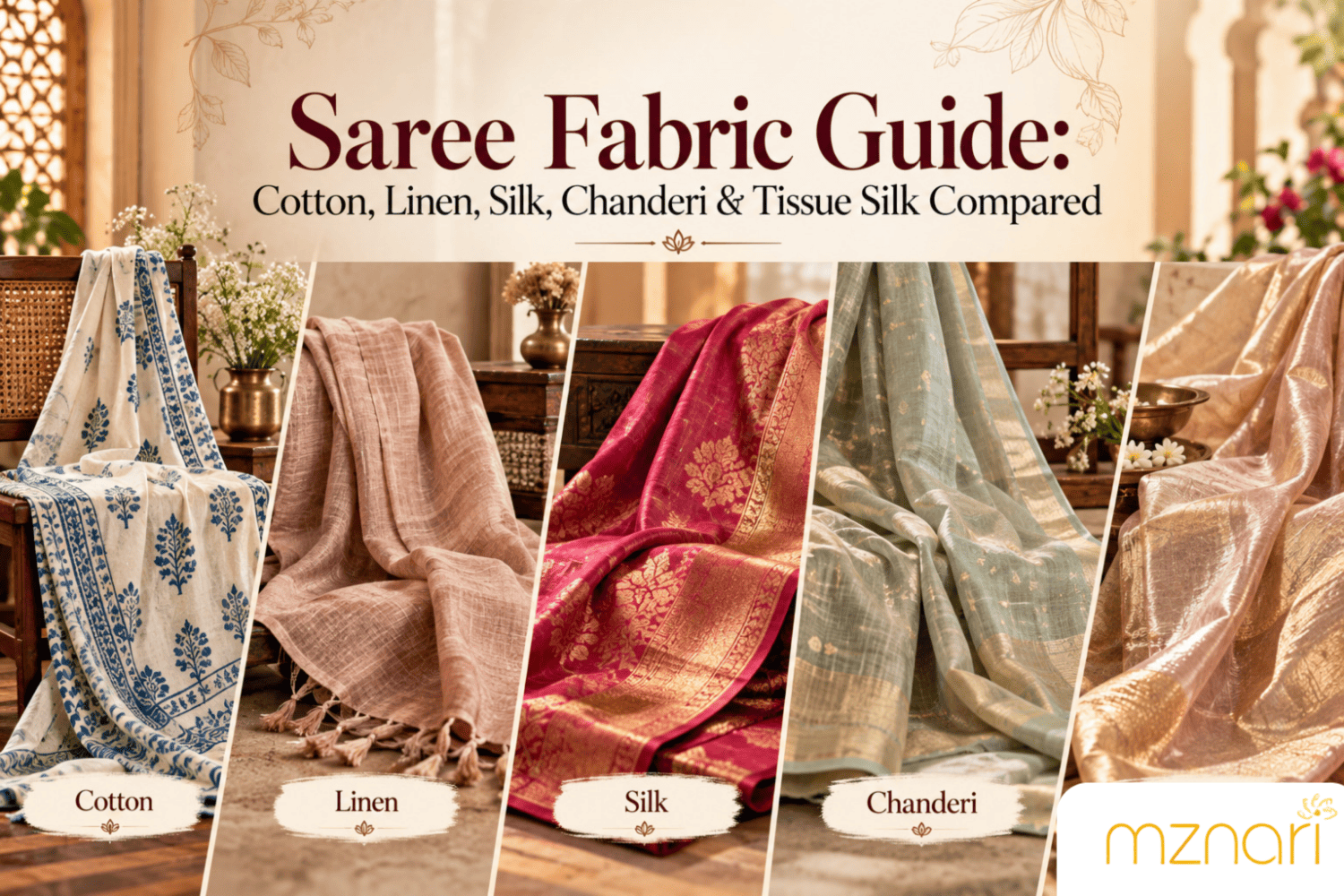
Confused about which saree fabric to pick? A simple, honest comparison of cotton, linen, silk, Chanderi, and tissue silk — comfort, price, and best occasion for each
Cotton vs Linen vs Silk vs Chanderi vs Tissue Silk – Complete Saree Fabric Guide
Most saree shopping goes wrong at the fabric stage, not the design stage — you fall for a print online, order it, and only realise at home that the fabric doesn't suit the occasion or the weather. This guide compares the five fabrics that matter most, in plain language, so you pick right the first time.
Cotton – The Everyday Workhorse
Cotton is breathable, easy to wash, holds pleats well, and survives daily wear without complaint. It's not the fabric for a wedding reception, but for daily wear, office, and casual outings, nothing beats it on comfort-per-rupee. Browse the Cotton and Mul-Cotton ranges if this is your main use case.
Linen – Cotton's More Elegant Cousin
Linen has a similar breathability to cotton but a slightly stiffer, more structured drape that looks a notch more polished — good for a work meeting or a casual lunch out where you want to look put-together without going festive. It creases more than cotton, so it needs a bit more care through the day. See the Linen collection.
Silk – The Occasion Fabric
Silk is heavier, richer-looking, and holds embellishment (zari, embroidery) far better than any of the other fabrics on this list — which is exactly why it's reserved for weddings, festivals, and formal functions rather than daily wear. It also creases and stains more easily, so it's not a practical choice for a long workday. Explore the Silk collection.
Chanderi – Light, Sheer, and Festive
Chanderi sits in an interesting middle ground — lighter and more breathable than pure silk, but with a subtle sheen that makes it feel more special than cotton. It works well for daytime wedding functions, festive lunches, or office parties where silk would feel like too much. Check the Chanderi range.
Tissue Silk – Shimmer Without the Weight
Tissue silk has a fine metallic shimmer running through the weave, which makes it a favourite for evening functions and sangeets where you want the saree to catch the light without wearing something as heavy as pure silk. The Chandi Rangi Tissue Silk Saree is a good example of this balance. Browse the full Tissue Silk collection.
Quick Comparison by What You Actually Need
For daily wear and office: Cotton or Mul-Cotton — most breathable, easiest to maintain. For a polished casual look: Linen — structured drape, still comfortable. For weddings and festivals: Silk or Zari — the richest look, worth the extra care. For daytime wedding functions: Chanderi — festive but still light. For evening parties and sangeets: Tissue Silk — shimmer without silk's weight.
Which Fabric Is Best for Summer?
Cotton and linen are the clear winners for Indian summers — both breathe well and don't trap heat the way silk and tissue silk do. If you have a summer wedding to attend, Chanderi is the most festive-looking fabric that still stays reasonably cool.
Quick FAQ
Which saree fabric is best for daily wear?Cotton or mul-cotton — breathable, durable, and easy to wash regularly.
Is Chanderi saree better than silk?Not better, just different — Chanderi is lighter and more suited to daytime functions, while silk suits formal evening occasions better.
What is the most breathable saree fabric?Cotton, followed closely by linen — both are the best choices for hot and humid weather.